
Growing People-Growing Possibilities
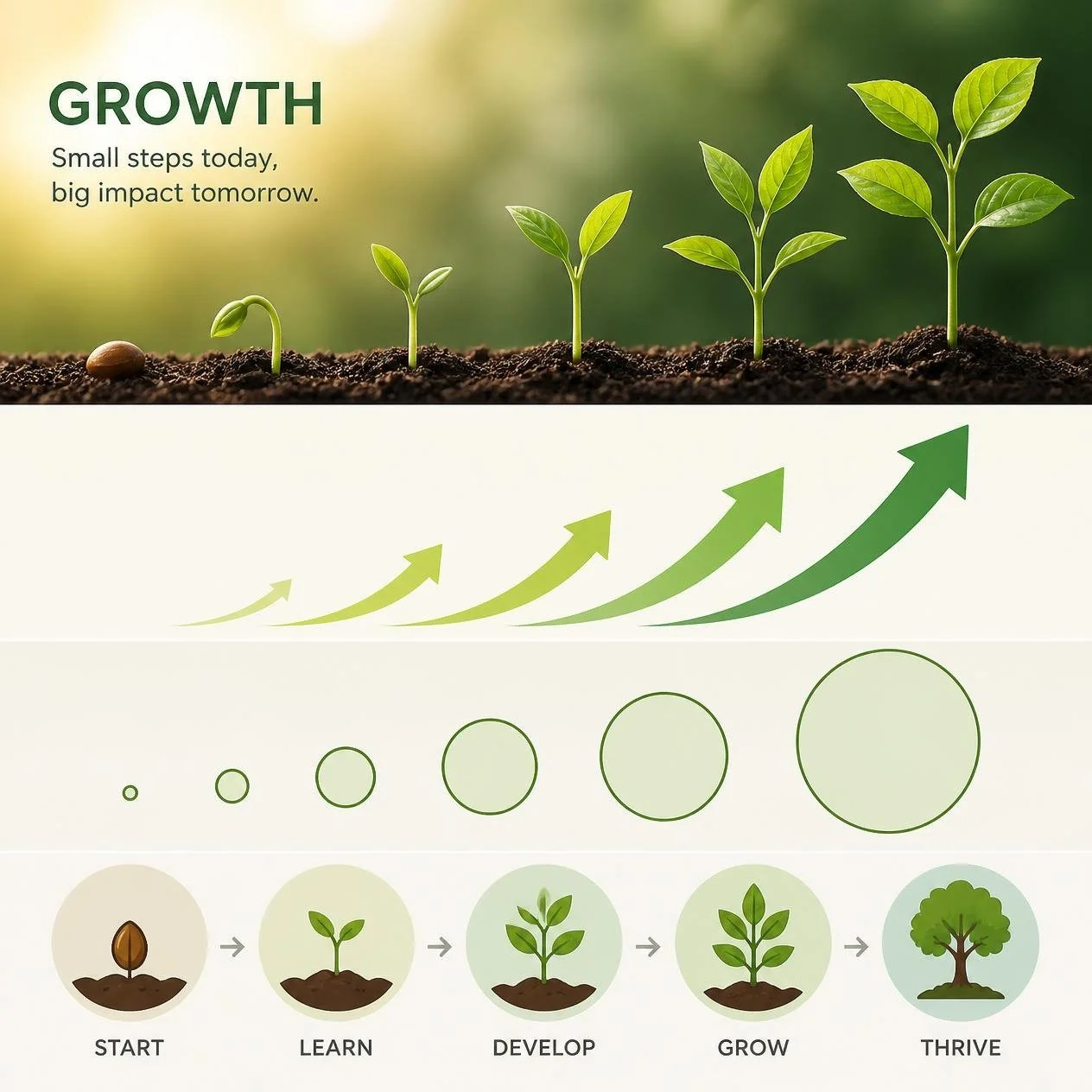
Growing People: Create Learning Pathways
Ask any leader what their most valuable asset is, and they'll say "our people." Ask what their people development strategy is, and you'll often get a pause. That gap, between what we say about people and what we do to grow them, is where organizations quietly lose their best talent.
Growth Mindset Isn't a Poster on the Wall
At its core, a growth mindset is a simple belief: ability isn't fixed. People develop skills, judgment, and leadership capacity through effort, feedback, and practice.
Here's what organizations miss: it's not just something employees should have. It's something the organization must have for its employees. Treat people as finished products, and the message is clear: This is as far as you go here. Eventually, they act on it, and it’s usually by leaving. Treat them as works in progress worth investing in, and the message flips: We see who you're becoming. That's the foundation of loyalty more often than not.
From Good Intentions to Intentional Pathways
Most organizations don't fail at development because they don't care. They fail because they leave it to chance. An intentional learning pathway answers three questions for every employee: Where am I now? Where could I go? How do I get there—through stretch assignments, mentoring, coaching, and regular check-ins?
When pathways are real, resourced, discussed, and rewarded, employees stop waiting for permission. They raise their hands for hard projects, coach their peers, and lead from where they are, title or not.
What This Looks Like in Practice
Consider Scottie, a sharp operations coordinator who's been quietly excelling for three years and growing restless. In most organizations, he either gets promoted with no preparation and struggles, or leaves for a company that offers him a future.
Instead, his manager builds a pathway. Scottie wants to lead someday but doubts his ability to handle conflict. So he takes on a cross-functional project, shadows a senior manager during tough conversations, and works with a coach for six months.
The coach's role is catalytic. Scottie doesn't just learn techniques, he reframes conflict from "something I avoid" to "something I can navigate," practices hard conversations before they happen, and debriefs the ones that go sideways without spiraling into self-criticism.
Six months later, Scottie is leading confidently, his team is energized, and his manager has a succession plan. The company didn't just retain an employee. It grew a leader.
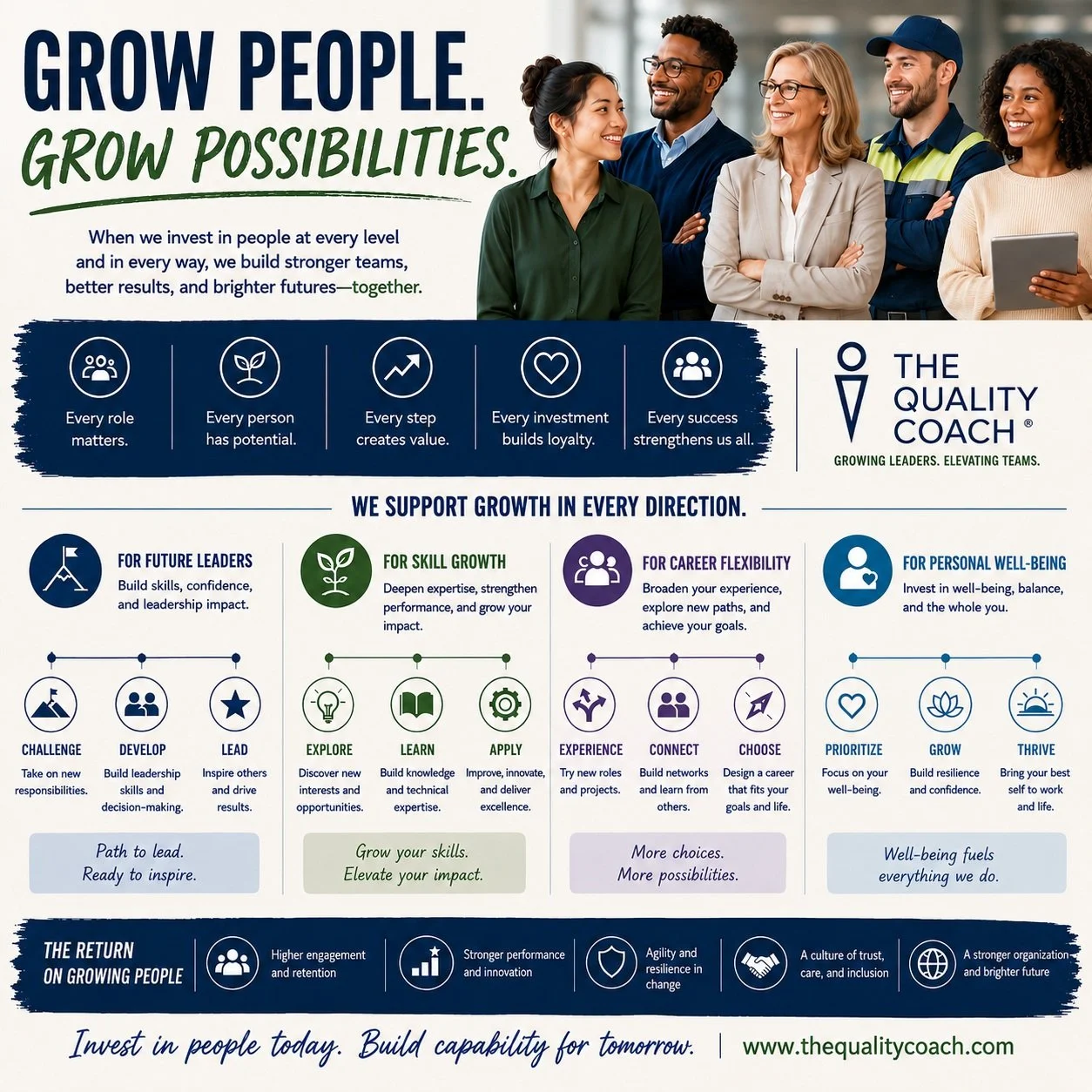
The Return on Growing People
Employees who feel supported and invested in show up differently. They take ownership, solve problems early, and make everyone around them better. That's not soft stuff, that's operational advantage.
The question isn't whether your people can grow. They can. The question is whether your organization is built to grow them or whether someone else's will.
Ready to build learning pathways in your organization? Let's talk. Email info@thequalitycoach.com